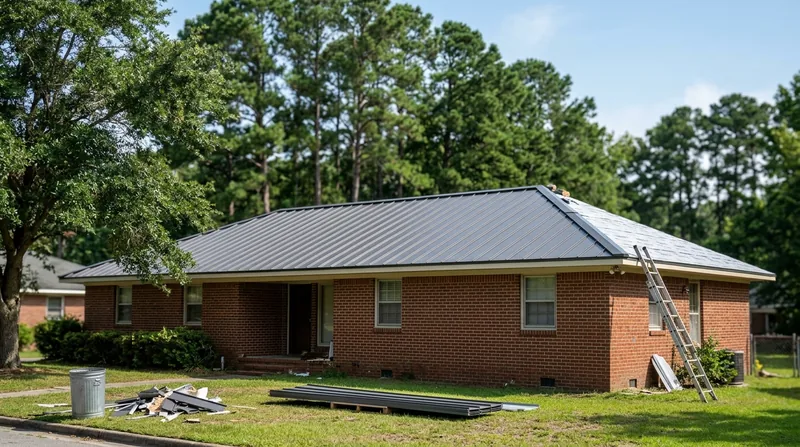




Metal Roof Installation in Greenville: Built for Tar River Heat, Wind and Pines
When you need Metal Roof Installation in Greenville, the roof has to handle more than the average American shingle job. This is the flat Tar River floodplain of eastern North Carolina, sitting at roughly 50 feet on sandy loam, with loblolly pines and live oaks dropping limbs on low-pitch shingle roofs across Brook Valley, Cherry Oaks and Eastwood. Summers are hot and heavily humid, which streaks asphalt with algae and moss, and hurricane season brings wind-driven rain straight through tired decking.
We install panel systems engineered for that exact mix: high-temperature underlayment, correct attic ventilation, and flashing detailed for the thunderstorms and occasional hail that follow the tropical systems. A properly installed metal roof here is a 40 to 60 year roof, not a 15 year one. If you are weighing options, start with our standing seam metal roofing page to compare profiles before you commit.
Why Greenville Roofs Fail Early and Why Metal Installation Fixes It
The dominant failure mode in Pitt County is not snow load. It is heat, humidity and organic debris. Shingle roofs on the 1950s to 1970s brick ranches in Biltmore and the 1990s to 2020s subdivisions in Ironwood and Red Banks cook through July and August, then get hammered by pine needles and sweetgum litter that traps moisture in valleys and behind chimneys.
- Algae and moss streak north-facing shingle planes because humid air never fully dries them.
- Hurricane and tropical storm gusts peel lifted shingle tabs and drive water past worn pipe boots.
- Pine and oak limbs crack brittle mats and open the deck to the next thunderstorm.
- Low-slope porch roofs on the uptown Craftsman bungalows pond water and rot fascia.
Metal installation addresses all four at once with a continuous, non-porous surface that sheds debris and reflects heat.
Key info: A homeowner near the Tar River historic district had a 1920s porch roof that had been patched four times. We tore off to the deck, replaced soft sheathing, and installed standing seam with a proper cricket at the chimney. Two summers of storms later, no callbacks.
Permits for a full re-roof are commonly required in Greenville and Pitt County, and thresholds and inspection steps vary by jurisdiction. Always confirm current rules with the City of Greenville building department before work starts.
How We Install a Metal Roof in Greenville, Step by Step
Every installation follows the same sequence, whether it is a farmhouse outbuilding in Grimesland or a two-story brick colonial near the university. We start with an on-site inspection of the deck, then plan the tear-off, underlayment and flashing around your weather window, because summer thunderstorms here build fast in the afternoon.
- We inspect and measure the existing roof, decking and attic ventilation, and document any soft sheathing.
- We pull the required permit and confirm any historic district or HOA color and profile approvals.
- We remove the old roofing to the deck, replace rotten sheathing, and install high-temperature synthetic underlayment.
- We set drip edge, valley metal, chimney and skylight flashing, and pipe boots before a single panel goes down.
- We install the panels with manufacturer-specified fasteners and correct overlap for the local wind zone.
- We balance intake and exhaust ventilation, then walk the roof and gutters with you before cleanup.
Flashing is where most leaks are born, so we treat it as the main event, not an afterthought. See our flashing and chimney detail page for what that work involves.
Key info: On a Winterville subdivision home with a low-pitch rear addition, we found three layers of shingles and a rotted valley. Code limits how many existing layers you can recover over, so we stripped it and installed a ribbed panel with a new valley pan. The homeowner avoided a tear-off two years later.
Metal Roof Installation Methods We Use in Greenville
Not every Greenville home wants the same panel. Historic review boards near uptown often push toward profiles that read like the original, while farm outbuildings across the coastal plain favor exposed-fastener panels for cost and easy maintenance. Here is how the main approaches compare.
| Approach | Description | Best for |
|---|---|---|
| Standing seam | Concealed fasteners with raised seams, no exposed screws | Primary homes and historic-district roofs |
| Exposed-fastener ribbed panel | Corrugated or ribbed steel screwed through the panel | Barns, outbuildings and budget re-roofs |
| Metal shingle | Stamped panels that mimic slate or cedar shakes | HOA and historic homes needing a traditional look |
| Stone-coated steel | Granule-coated panels with a textured shingle appearance | Subdivisions and steep roofs where noise matters |
| Copper and specialty metal | Soldered or seamed copper and zinc for accent roofs | Porch roofs, bays and architectural accents |
We match the method to the structure, the budget and the local review rules, not to whatever is easiest to install.
Metal Roof Installation Cost in Greenville: What to Expect
Pricing starts at From $8/sq ft for basic exposed-fastener work and climbs from there. That starting figure assumes a straightforward single-story roof, good access and minimal sheathing repair. Most full installations on Greenville homes land well above it once you factor in tear-off, underlayment, flashing and ventilation.
What moves the number: roof pitch and complexity, the number of valleys, chimneys and skylights, whether we strip or recover existing layers, the panel system you choose, and how much decking has gone soft from years of pine debris and humidity. A two-story colonial near uptown costs more to access than a flat ranch in Ayden. Historic district or HOA approval can also add design review time.
Get two or three written estimates and compare scope line by line, not just the bottom line. A cheap number that skips underlayment or flashing is not a bargain in this climate. Our full pricing overview breaks down what each tier includes.
Metal Roof Installation Near Me: How to Vet a Contractor Near Greenville
Searching for metal roof installation near me returns plenty of names, and the difference between them shows up in paperwork and references, not in the sales pitch. Confirm the company carries both liability and workers compensation coverage, because an uninsured crew on your roof is your problem.
- Verify the contractor is licensed and insured, and ask for the certificate in writing.
- Get at least three estimates with itemized scope, not a single lump sum.
- Ask for local references on metal roofs at least two years old, then call them.
- Confirm who pulls the permit and who handles historic district or HOA design review.
- Check that flashing, underlayment and ventilation are spelled out in the contract.
A contractor who hesitates on any of these is telling you something. When you are ready to talk scope, reach us through our contact and free estimate page and we will walk the roof with you.
Metal Roof Installation in Greenville: Pricing Guide
| Service | Price | Details |
|---|---|---|
| Exposed-fastener ribbed panel installation | Starting at $8/sq ft | Includes tear-off, synthetic underlayment and basic flashing on a straightforward single-story roof. |
| Standing seam installation | Starting at $12/sq ft | Concealed fasteners and raised seams; price climbs with pitch, valleys and chimney count. |
| Metal shingle or stone-coated steel | Starting at $11/sq ft | Textured panels for HOA and historic homes; complexity and panel style drive the final rate. |
| Full tear-off with sheathing repair | On estimate | Soft decking from years of pine debris and humidity needs an on-site look before pricing. |
| Travel | Included | in Greenville and surrounding Pitt County areas, no separate call-out or mileage fee |
| Estimate | Free | Response within 24h at (252) 351-2955, no obligation to book |
Indicative pricing, the exact cost depends on square footage, finish, and site access. Free personalized estimate within 24h at (252) 351-2955.


